


Hajime no Ippo’s First Major Arc was on POINT
- Juju

- Oct 14, 2025
- 4 min read
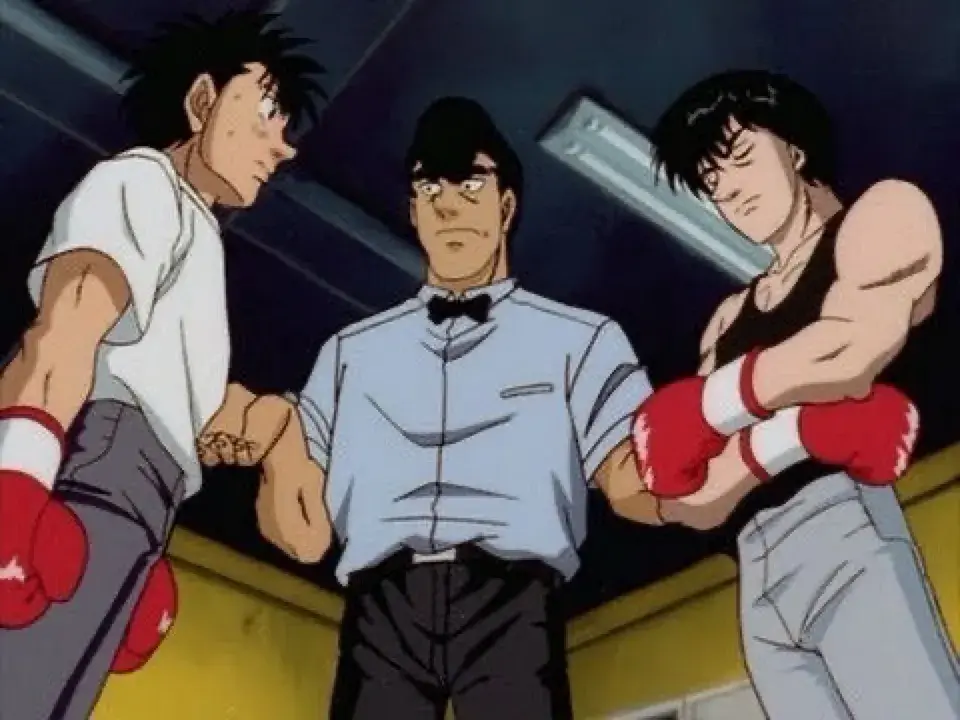
I’d heard of Hajime no Ippo when I first started watching anime in middle school, but never picked it up. It wasn’t talked about a lot, and as someone who loved talking about the things I watched, that was a dissuasion.
Recently, I picked it up while scrolling through the CW App. Which has a decent amount of content by the way, totally recommend.
I was immediately hooked as a sports lover. But I believe the themes of hard work, perseverance, and internal doubt have a universal appeal. They all come to a head at the second Ippo versus Miyata sparring match, and this is what had me dedicated to finishing the 130 episode show a mere 8 episodes in.
WARNING: SPOILERS FOLLOW FOR EPISODES 1–8
The titular character, Ippo Makunouchi, is plagued by self-doubt throughout the genesis of his boxing career. What makes it stronger is the all-so familiar feeling: he sees Ichiro Miyata, a boy his age, be excellent at boxing while he is still noticeably raw. Miyata ends up flooring Ippo in a sparring match.
Initially discouraged, Ippo hesitantly preserves. I think part of Hajime no Ippo’s charm is what makes it so grounded. Ippo isn’t a bumbling ball of enthusiasm like most shonen MCs. He has his enthusiastic moments, but for the most part, he’s very nervous. Ippo gets over the hump not entirely by himself, but mainly with the support of his trainers Takamura and Kamogawa. Without them, Ippo’s naturally gifted power punching most likely would’ve gone to waste.
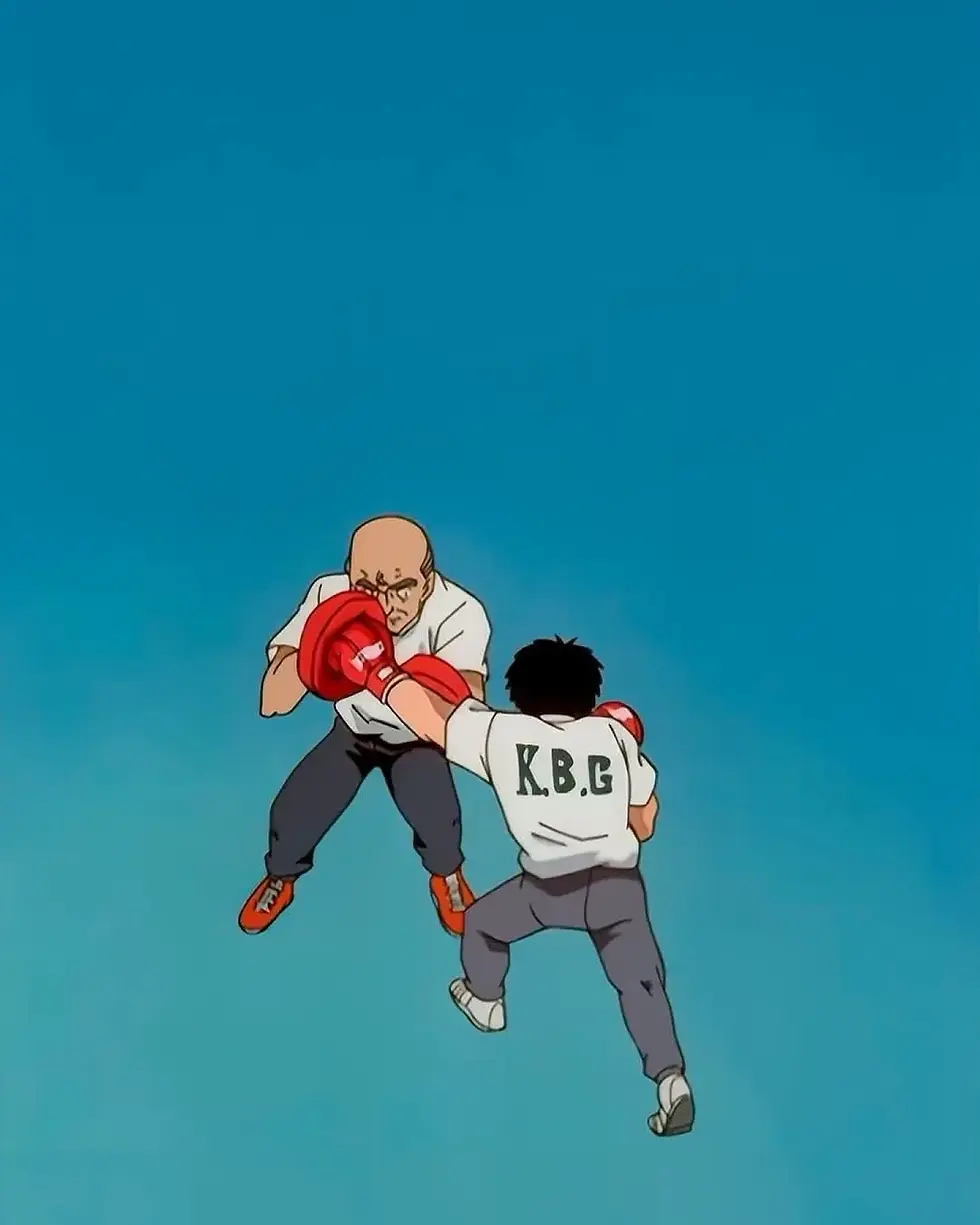
And that’s the first time Hajime no Ippo struck me as more than a hyper-positive sports anime. Ippo’s anxiety most likely would’ve made him quit if not for the support of others who saw in him what he did not see in himself, an aspect of realism which I adored.
After an intense training camp, Ippo prepares and is ready to take on Miyata in a rematch. Joining us is veteran boxing journalist Minoru Fujii, who hails Miyata as a young boxing prodigy.
In the second instance, instead of getting floored, Ippo’s raw power marginally prevails over Miyata’s speed and reaction-based offense. Ippo had spent hours practicing his uppercut, a move recommended to him due to his talent for power punching. He uses it to graze Miyata at the end of a brutal 4-round fight.

What first seems like a missed dagger, is actually the marginal victory that makes Ippo, the persevering fighter who lives on the margins, realize his anxieties and late start do not define him. The slightly grazed uppercut ended up connecting with Miyata’s chin and shook his brain to the point Ippo won via TKO. Ippo wins, and he now understands his hard work will pay off in ways he might not have initially expected.
In an episode titled “The Destructive Power of 1 Centimeter”, Ippo SQUEEZES by with natural talent, which I treasured for two reasons. The first is that squeezing by is the only believable way he could’ve got past someone as skilled as Miyata. The second is that it is a representation of his journey thus far. Hard work gets you far, but in the boxing world (and in the real world), far may only mean winning by the margins. But you take it anyway, because those margins are what make those hours and hours of hard work worth it.
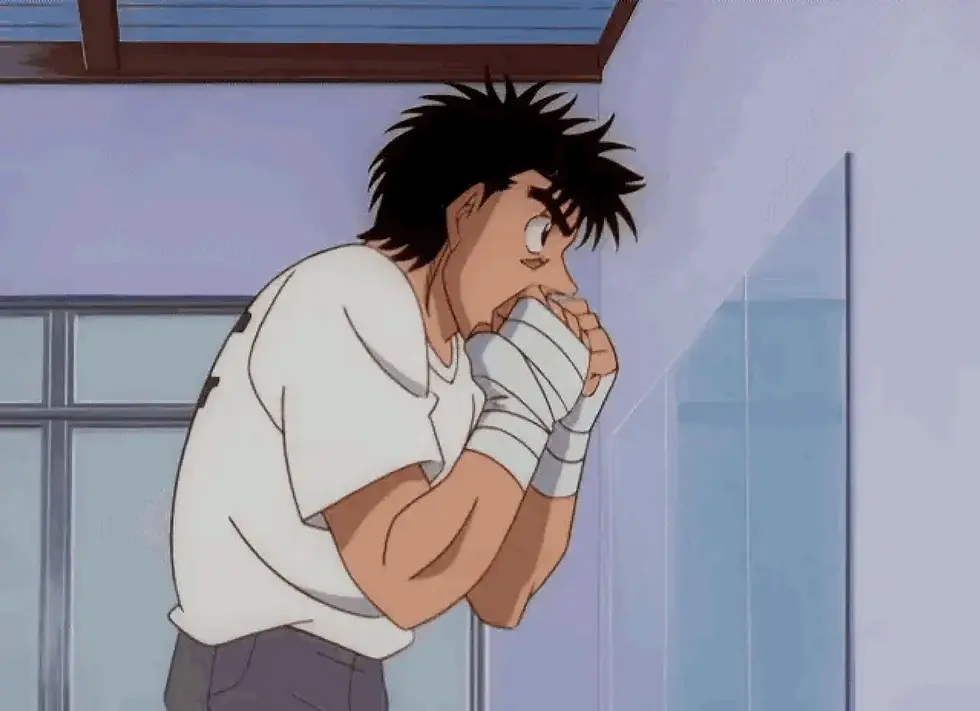
What I think Hajime no Ippo also does wonderfully in the aftermath is something I think a lot of fiction writers could take notes on. It uses Ippo’s victory to develop Miyata’s character arc and reflect it off of Ippo’s. In contrast, a lot of media only use events to develop main characters, giving side characters less focus.
Miyata is the son of a boxer. And his similarly speed-based boxing father ended his career in a loss to a power puncher, like how Miyata himself just lost to Ippo. Miyata has dedicated his boxing career to proving that speed can prevail over power, yet he just lost to a raw power puncher who has only been training for a month.
This is the bane of his boxing existence exemplified, and to make matters worse? The reporter who touted him as a prodigy has published his defeat in a magazine. With photographs nonetheless. Ouch.
Miyata was nowhere to be seen in the aftermath, with Takamura crediting it to humiliation. I can’t wait to see how this fully affects Miyata, a character who has no ill will to Ippo (despite finding him annoying), but also a character who’s boxing philosophy is rooted in bitterness. I can’t wait to see how he recovers, the new techniques he incorporates, and if his opinion shifts on Ippo and power punchers in general.
And lastly, the other part that struck me about this arc was Fujii’s presence. Fujii skipped out on a press conference for an upcoming world title fight (much to his editor’s dismay) to attend this sparring match.
I felt that in a meta way, he’s all of us who have something we are passionate about. The kind of fans that love the grittiest aspects of their passion, no matter the source. The kind who strive to constantly reignite the spark that made them passionate in the first place. The kind who would skip a noteworthy event to go to a random gym in the city, ditching clout for passion.
Despite his limited screentime, I felt a strong connection to Fujii while watching the show. There are numerous new seasonal anime that are highly rated, and many that’ve caught my eye. But I instead looked for and found this classic from 2000, because I felt Ippo would do the best job of keeping my passion for anime alive. And it’s been a lovely experience, one that I’m keen on taking my time with. And one that I’m surely dedicated to finishing after just 8 episodes.


Comments